
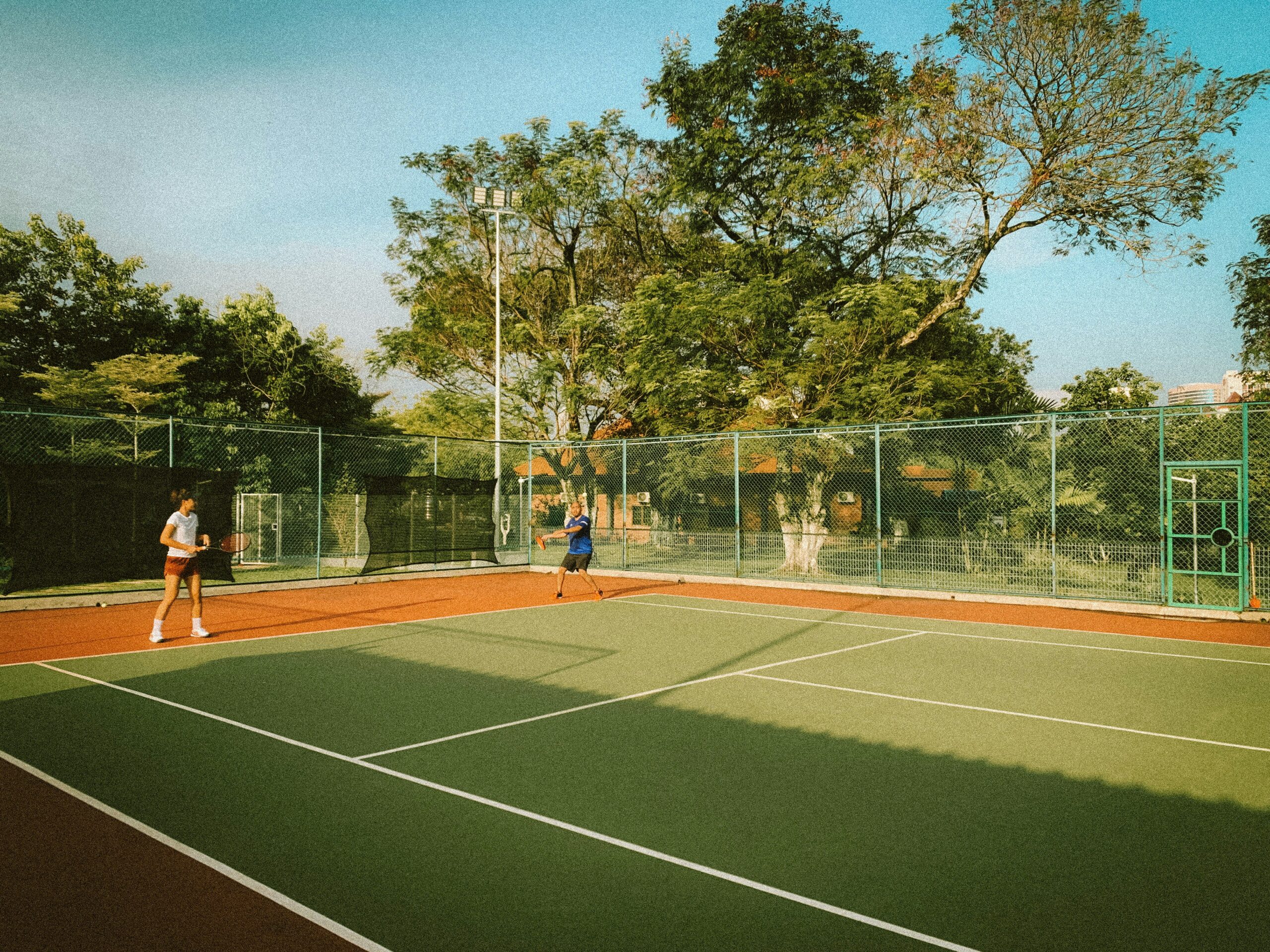
Tennis is a game of surfaces, and none is more unique, more challenging, or more steeped in tradition than grass. While clay courts test endurance and hard courts reward consistency, grass demands a special kind of artistry. It’s a fast, slippery, and living surface that forces players to adapt their game, rewarding aggression, precision, and a delicate touch. The grass court season is short, culminating in the sport’s most prestigious event, Wimbledon, where mastering this unique surface is the key to glory.
This post will explore the art of grass court tennis. We’ll dive into the unique challenges and strategies required to excel on the green lawns of Wimbledon and beyond. We will examine how the surface’s characteristics shape the style of play, what skills become most important, and why success on grass is considered a hallmark of a truly complete player.
What Makes Grass Courts Unique?
Unlike the predictable, uniform bounce of hard courts or the high, slow bounce of clay, grass is a living, breathing surface. This creates a set of characteristics that fundamentally changes how the game is played.
Speed and Low Bounce
The most defining feature of a grass court is its speed. The soft, slick blades of grass absorb very little of the ball’s energy upon impact. As a result, the ball skids off the surface, staying low and losing less speed than on any other court. This gives players significantly less time to react, prepare for their shots, and get back into position. A powerful serve or a well-struck groundstroke can become an instant weapon, often rushing opponents into making errors.
The Unpredictable Bounce
Because grass is a natural surface, it is never perfectly flat. Tiny imperfections in the turf, worn patches, and the way the grass lies can lead to unpredictable bounces. A ball that might bounce true on a hard court can suddenly shoot through low, die, or take a bad hop on grass. Players must have lightning-fast reflexes and the ability to make last-second adjustments to their footwork and swing. This element of unpredictability adds a layer of mental challenge to every point.
A Slippery Surface
The slick nature of grass makes movement a constant challenge. Players find it harder to change direction quickly, and slipping is a common hazard. This is why you often see players wearing special pimpled shoes designed to provide better grip. The slippery surface also favors players who can move efficiently with small, controlled steps rather than relying on the long, sliding movements that are common on clay.
The Strategy: Attack is the Best Defense
The fast, low-bouncing nature of grass courts heavily favors an aggressive, attacking style of play. Players who wait for their opponents to make mistakes often find themselves on the back foot, with little time to defend. The key to winning on grass is to seize control of the point early and keep the pressure on.
The All-Important Serve
The serve is arguably the most important shot in grass court tennis. A powerful, well-placed serve is incredibly difficult to return effectively on a fast court. The ball skids low, forcing the returner to hit up on the ball, often resulting in a weak or defensive reply. This allows the server to take immediate control of the point with their next shot.
The “slice” serve, which curves away from the returner and stays exceptionally low, is a particularly potent weapon on grass. Great grass court players like Roger Federer and Pete Sampras built their games around a dominant serve that set them up for easy points.
The Art of the Volley: Dominating the Net
Because the serve is so effective, the “serve-and-volley” tactic has traditionally been the classic grass court strategy. This involves the server immediately rushing to the net after their serve to cut off the return and finish the point with a volley. While this style has become less common in the modern era of powerful baseline groundstrokes, the principle of getting to the net remains vital.
Players who are comfortable at the net have a significant advantage. They can take time away from their opponents, cut off passing shots, and finish points decisively. Soft, delicate volleys, known as “drop volleys,” are especially effective, as the ball tends to die on the soft grass, making it nearly impossible to retrieve.
Flat Groundstrokes and the Slice Backhand
On grass, hitting groundstrokes with heavy topspin is less effective than on other surfaces. The high, looping trajectory of a topspin shot sits up nicely for opponents on clay, but on grass, it can give them too much time. Instead, flatter groundstrokes that penetrate through the court and stay low are more effective.
The backhand slice is another essential tool. A well-executed slice stays incredibly low after the bounce, forcing opponents to bend their knees and dig the ball out. This can disrupt their rhythm and create opportunities to attack. Players like Roger Federer and Steffi Graf used their slice backhands to great effect, both as a defensive shot to reset points and as an offensive weapon to approach the net.
The Skills That Shine on Grass
To succeed on grass, a player needs a specific set of skills that go beyond just hitting the ball hard.
Movement and Footwork
Great grass court players are masters of movement. They use small, efficient steps to maintain balance on the slippery surface. They must be able to move forward and backward with equal ease, ready to transition from defense to attack in a split second. Anticipation is key—reading the opponent’s intentions and getting into position early is often more important than raw speed.
Touch and Feel
Power is important on grass, but so is finesse. The ability to absorb pace, play delicate drop shots, and hit soft volleys requires exceptional touch and feel. These shots can break up the rhythm of a baseline rally and exploit the low-bouncing nature of the surface.
Mental Toughness
Playing on grass is a mental battle. The speed of the game requires intense focus on every single point. One lapse in concentration can result in losing a service game and, often, the set. Players must also stay calm and composed when faced with bad bounces or a slippery fall, accepting the unpredictable nature of the court and moving on to the next point.
Actionable Next Steps: Appreciating the Artistry
The art of grass court tennis is a beautiful blend of power, precision, and tactical intelligence. It’s a throwback to an older style of play that rewards aggression and all-court skills.
- For Fans: The next time you watch Wimbledon, pay close attention to these dynamics. Notice how players use the slice serve to drag their opponents wide. Watch their footwork as they move towards the net. Appreciate the players who can mix powerful drives with delicate drop shots.
- For Players: If you ever get the chance to play on a grass court, embrace the challenge. Focus on getting your first serve in, look for opportunities to come to the net, and practice your slice backhand. Experiencing the unique feel of grass court tennis will give you a newfound appreciation for the skill it takes to master it.
Ultimately, grass court tennis is a test of a player’s completeness. It requires them to be not just a great server or a great baseliner, but a true all-court artist.


