
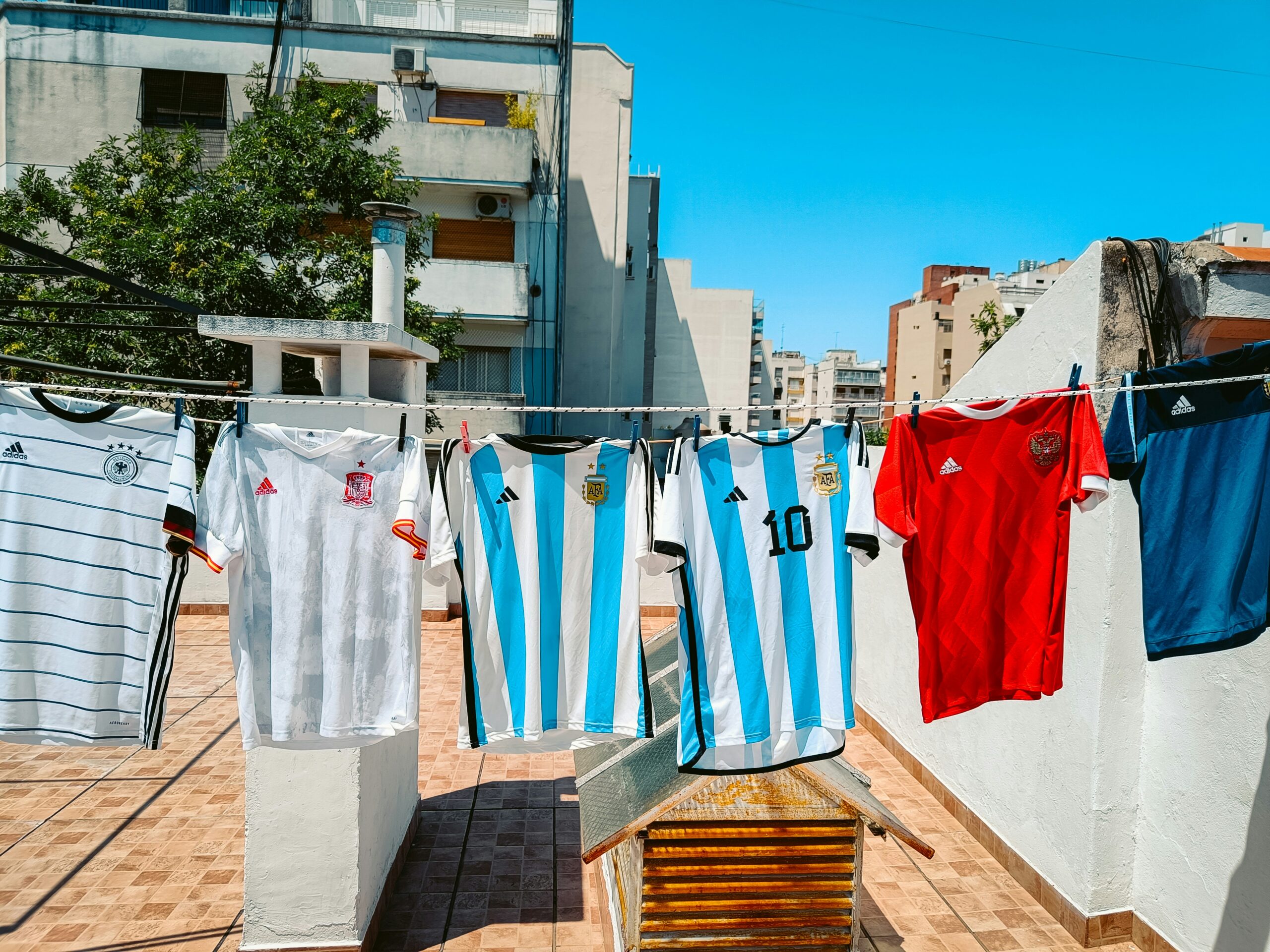
A football jersey is more than just a piece of sportswear. It is a symbol of identity, a badge of honor, and a walking piece of history. For fans, it’s a way to show allegiance to their tribe. For players, it’s the armor they wear into battle. Over the decades, these iconic garments have transformed from simple, heavy wool tops into high-tech, lightweight apparel that also carries immense cultural and commercial weight.
This post explores the fascinating evolution of the football jersey. We will trace its journey from basic team identifiers to fashion statements and performance tools. We’ll look at the materials, the designs, and the iconic kits that have defined eras and captured the hearts of millions.
The Early Days: Heavy Wool and Basic Identity
In the late 19th and early 20th centuries, the concept of a team “kit” was rudimentary. The primary goal was simply to distinguish one team from another. Players wore heavy, long-sleeved wool or cotton shirts, which were durable but incredibly uncomfortable. These materials absorbed sweat and rain, becoming heavy and restrictive during a match.
Designs were basic, usually consisting of solid colors, simple hoops, or halves. Numbers on the back of shirts were not introduced until the 1920s and didn’t become mandatory in many leagues for several more years. The focus was purely on function, with no consideration for player comfort, performance, or commercial appeal. These were rugged garments for a rugged game.
The Mid-Century Shift: Lighter Fabrics and Club Crests
The post-war era brought gradual changes. As synthetic fabrics became more available, clubs began to move away from wool. Lighter cottons and new polyester blends offered better comfort and were easier to care for. While still a long way from modern materials, this shift made a significant difference to players.
This period also saw the rise of the club crest as a permanent feature. Previously, crests were often reserved for big occasions like cup finals. Now, they were proudly stitched onto the chest, solidifying the jersey as a key part of a club’s identity. The designs remained relatively simple, but the introduction of V-necks and more structured collars added a touch of style. The jersey was beginning to look more like the kit we recognize today.
The 70s and 80s: The Dawn of Commercialization and Bold Designs
The 1970s marked a major turning point. Sportswear manufacturers like Adidas and Umbro started to become more prominent, and their logos began appearing on team shirts. In 1973, German club Eintracht Braunschweig made history by placing a sponsor’s logo—Jägermeister—on the front of their jersey. This opened the floodgates for commercialization, and by the 1980s, shirt sponsorship was commonplace across Europe.
This era is also famous for its bold, and sometimes outlandish, designs. The tight-fitting shirts of the 70s gave way to looser, more flamboyant jerseys in the 80s. Pinstripes, shadow prints, and geometric patterns became popular. The material was often a shiny, synthetic polyester that defined the look of the decade. Kits from this period, like the iconic Holland ’88 jersey or Liverpool’s Crown Paints kits, are now highly sought-after retro items, celebrated for their character and nostalgic value.
The 90s: Baggy Fits and Experimental Designs
The 1990s took the design experimentation of the 80s and pushed it to the extreme. The fits became notoriously baggy, and the designs grew even wilder. Goalkeeper jerseys, in particular, were famous for their chaotic, multi-colored patterns. It was an era of creative freedom, resulting in some of the most loved and loathed kits in football history.
Arsenal’s “bruised banana” away kit and Manchester United’s sharp-collared black away kit are perfect examples of 90s design. While some were aesthetically questionable, they were undeniably memorable. This period solidified the jersey’s status as a fashion item. Fans began wearing them not just to matches, but as casual streetwear, signaling the start of a massive new market for clubs and manufacturers.
The Modern Era: The Age of Technology and Performance
From the 2000s onwards, the focus shifted dramatically towards science and player performance. Brands like Nike, Adidas, and Puma began investing heavily in research and development to create jerseys that provided a competitive edge. The baggy fits were replaced by sleek, athletic cuts designed to reduce drag and improve movement.
The materials are the biggest innovation. Modern jerseys are made from ultra-lightweight, moisture-wicking polyester fabrics. These materials pull sweat away from the body, keeping players dry and comfortable. They often feature laser-cut ventilation holes and mesh panels in key heat zones to improve breathability. Some jerseys even have compression technology built in to support muscles. Today’s kit is a finely tuned piece of athletic equipment.
The Cultural Significance of the Football Jersey
Beyond the technology and design, the football jersey remains a powerful cultural artifact.
- National Identity: A national team’s jersey is a symbol of pride that unites a country. Brazil’s canary yellow, Argentina’s blue and white stripes, and Italy’s Azzurri blue are instantly recognizable and carry the weight of their nation’s footballing history.
- Club Allegiance: For supporters, wearing their club’s colors is a public declaration of loyalty. It connects them to the team and to a global community of fellow fans.
- Fashion and Streetwear: The lines between sportswear and fashion have blurred completely. Retro jerseys are now high-fashion items, and collaborations between clubs and fashion brands (like PSG x Jordan) have become mainstream. The jersey has transcended the pitch to become a staple of modern style.
Conclusion: A Thread Through History
The journey of the football jersey mirrors the evolution of the sport itself—from a simple pastime to a global, commercial, and technological powerhouse. It has transformed from a heavy wool shirt into a high-performance garment and a fashion statement.
Yet, its core purpose remains unchanged. It is a symbol that binds players and fans together, representing a shared history, a common passion, and an unbreakable bond. Whether it’s a classic cotton top from the 60s or a state-of-the-art jersey of today, the shirt will always be more than just a shirt. It’s the fabric of football.